
The China Wall: Why BYD's Cheap EVs Are the US Industry's Silent Threat
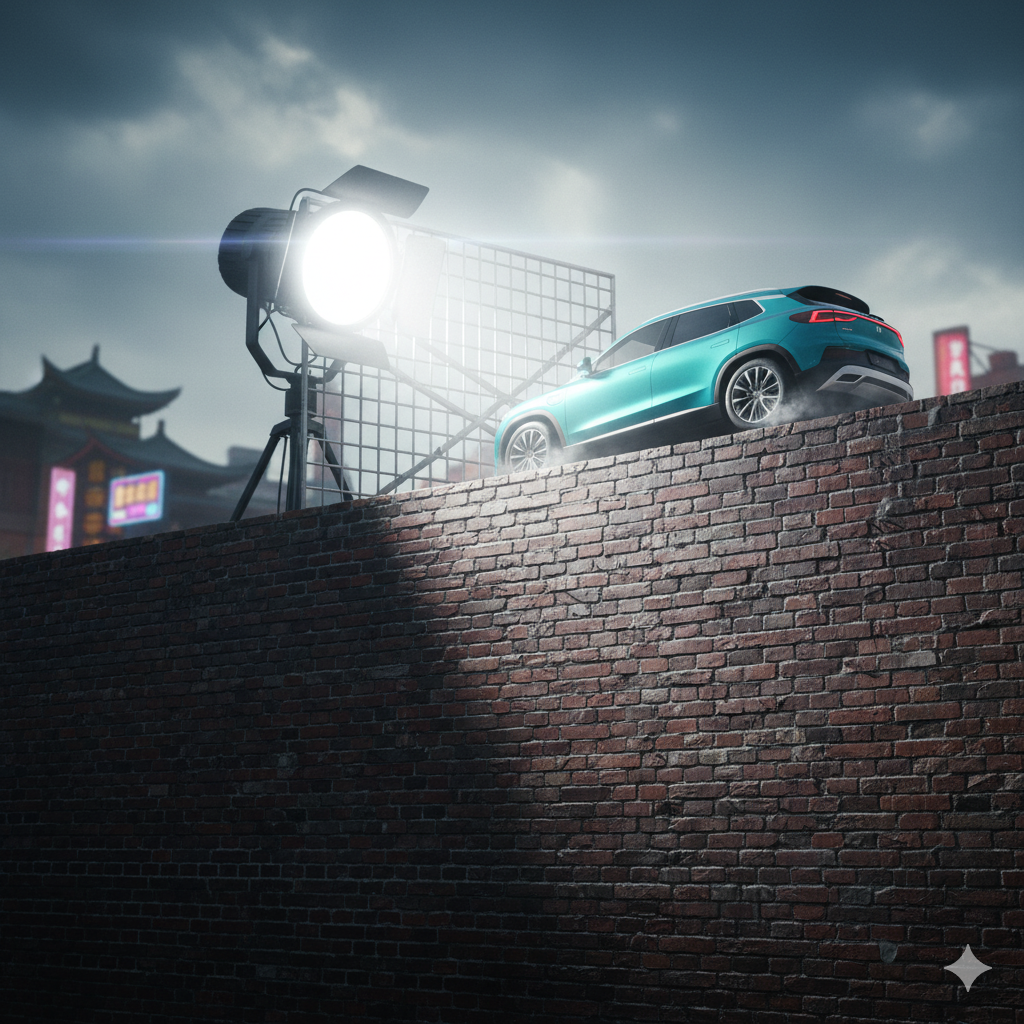
Chinese giants like **BYD** are dominating the global Electric Vehicle (EV) market with models that boast low cost, high tech, and unmatched scale. While the U.S. government has imposed **100%+ tariffs** to keep these cars out, China's success poses a **long-term threat** to the competitiveness of Ford, GM, and Tesla, and currently prevents the American consumer from accessing the world’s most affordable EVs.
Detailed Analysis: Production Dominance
China holds an overwhelming advantage in the EV supply chain, controlling much of the essential mineral processing (lithium, cobalt) and battery manufacturing: 1. **Unbeatable Production Cost:** Chinese companies can produce EVs at a significantly lower cost than their American and European rivals. 2. **Rapid Innovation:** Chinese automakers are quickly advancing in software, digital cockpits, and battery designs (like BYD's Blade Batteries). 3. **Tariff Protection:** The high U.S. tariffs are the only barrier preventing these cheap EVs from flooding the market and forcing a price war on domestic EVs.
Impact on the American Consumer
The "blocking" of Chinese EVs has a dual effect on the consumer:
- **Higher Prices:** Consumers are effectively shielded from direct competition, but they pay the price of this protection: domestic and U.S.-bound EVs face less pricing pressure and remain expensive.
- **Focus on Security:** The protection allows U.S. automakers to focus on building a robust, domestic supply chain, reducing reliance on foreign players.
FAQ: Quick Answers
| Question | Answer |
|---|---|
| **Can I buy a BYD in the US now?** | Not directly. Tariffs make the importation and sale of Chinese EVs financially unfeasible for most companies. |
| **Why are they so cheap?** | Due to China's control over the battery supply chain, government subsidies, and massive production scale. |
Conclusion and Next Steps
China's rise is the biggest global force shaping the future of EVs. The American consumer is currently shielded from hyper-competitive pricing but should watch closely, as global pressure will eventually force domestic automakers to become more efficient and make EVs more affordable.